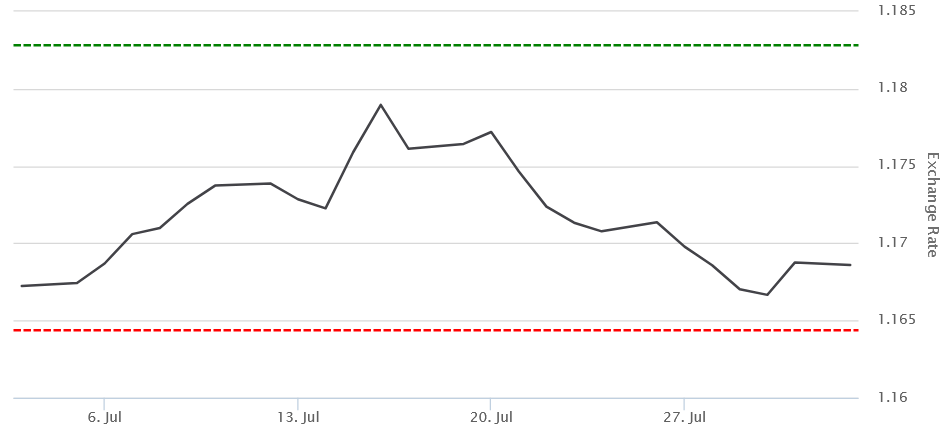
Sterling begins the week having stopped its recent slide against the euro and gaining momentum against the US dollar. The overall positive backdrop for sterling exchange rates was three Bank of England policymakers voting to raise rates on Thursday. This was a stronger challenge than markets had expected and a reminder that UK inflation remains the Bank’s main concern. It contrasted with the US, where the exact same threat of inflation was met with a more dovish response and the dollar floundered.
However, potentially riding to US Federal Reserve chair Kevin Warsh’s rescue was President Trump, who claimed once again that a peace deal is close and called off more attacks on Iran. That good news has hurt the dollar, but is only part of the oil story. OPEC+ agreed on Sunday to raise production modestly in September, which should moderate oil prices and offer consumers some relief after a turbulent month for energy prices.
The increase is relatively small, though. Shipping through the Strait of Hormuz and the Red Sea remains disrupted, while the diplomatic picture between Washington and Tehran can change remarkably quickly.
The euro found support on Friday, based on both the bad news of inflation coming in higher than expected across the bloc, but also better than expected economic growth.
The US dollar struggled after disappointing GDP data. The manufacturing Purchasing Managers Index (PMI) arrives today, followed by final results for Services and Construction over subsequent days. These have the power to impact exchange rates, but the main focus may be on American employment tomorrow and Friday. Markets will also be watching whether Sunday’s cautious oil optimism survives the reopening of global trading.
Sterling ended Friday on firmer ground following the Bank of England’s surprisingly close decision. The pound’s next test will come from business rather than Threadneedle Street, with final PMI results. With the flash reading's optimism be confirmed? However, with little major UK data due this week, sterling may take its direction from global manufacturing figures, oil prices and the broader appetite for risk.
EUR: Factory surveys test the euro’s brighter mood
The euro made modest progress against the US dollar at the end of last week, helped by economic growth that proved more resilient than forecast. That improvement now faces an early test from today’s PMI manufacturing surveys. Germany, supposedly the eurozone's manufacturing powerhouse, remains the key weak spot. Any sign that its factories are beginning to recover would add weight to the eurozone’s better growth figures. Another disappointing reading would underline how dependent the region remains on government spending and stronger performances elsewhere.
Dollar waits for the jobs verdict
The US dollar lost ground to both sterling and the euro on Friday. Slowing GDP growth and a rather waffly message from the Federal Reserve left investors questioning whether the American economy can continue to outperform its peers. That debate will run throughout the week. Employment figures are likely to provide the clearest answers, on Tuesday and Friday, while oil and developments in the Middle East could quickly restore demand for the dollar during periods of nervousness. For now, markets are watching whether Sunday’s diplomatic and supply signals can produce a calmer start to August.
Below you will find the current live exchange rates and movements in the currency markets. Please note that these rates are only accurate at the time of sending and should be used as an indication only.