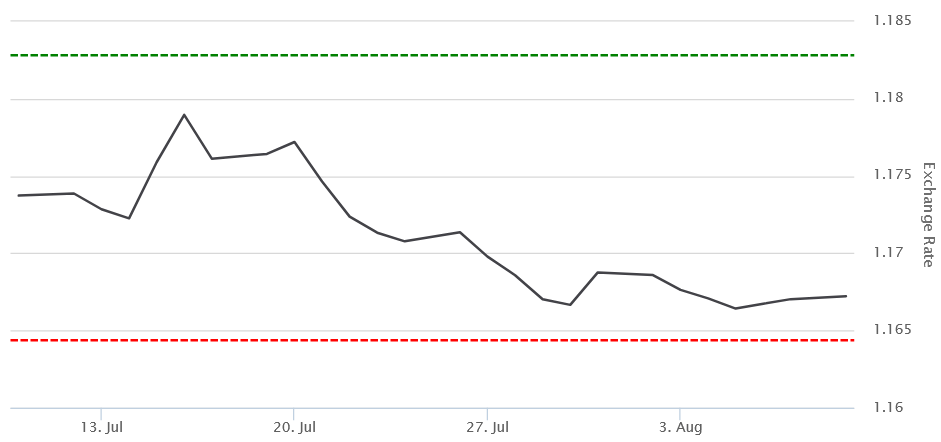
Apart from a positive performance against a US dollar with its own problems, sterling has been largely on the back foot the past month. The Burnham bounce has played itself out and the markets are reported to be concerned about the Autumn Budget and the dwindling hopes (of global investors) for an interest rate rise.
Meanwhile, on Friday we had news that America’s jobs machine has finally spluttered. Non-Farm Payrolls (NFP) data showed that employers unexpectedly cut 23,000 positions in July, the first monthly fall since February. Earlier estimates for May and June were also revised sharply lower.
The last time this happened President Trump promptly fired the person in charge of the data. It was all enough to change the mood around the US dollar. Investors immediately scaled back expectations that the Federal Reserve will raise interest rates again in September, sending the dollar lower on Friday. However, we only have to wait another 48 hours for America’s inflation numbers on Wednesday and they could easily alter the picture once again.
Sterling and the euro both gained marginally on the dollar, despite having their own inflation concerns.
Britain takes centre stage on Thursday with fresh Gross Domestic Product (GDP) for the second quarter of 2026. This will offer the clearest indication yet of how well Britain coped with the energy shock and uncertainty surrounding the Middle East. The Bank of England made its position clear by holding rates. Whether it was right to do so, when the European Central Bank raised its rates, may become clearer this week and next when the unemployment and inflation numbers join GDP.
After one surprisingly weak American report, markets will be looking for evidence that the slowdown is becoming a trend.
Sterling starts the week coming to the end of its usual early-month lull in data. On Thursday things ramp up with the latest GDP figures but it’s another few days after that until we get unemployment and then inflation data and the markets and Bank of England get a clearer picture of how the economy is doing.
EUR: Euro has inflation on its side
The euro has been supported over the past month, but enters Monday with eurozone inflation above the European Central Bank’s target, which limits how relaxed policymakers can afford to become even as economic growth remains relatively subdued. We will get final eurozone inflation figures from Wednesday.
USD: Jobs report resets the Fed debate
Friday’s employment numbers gave dollar investors a clear reason to reconsider the Federal Reserve’s next move. Wednesday now matters enormously. Weakening inflation would reinforce the message from the jobs market. A hotter figure could make for another lively week across currency markets.
Below you will find the current live exchange rates and movements in the currency markets. Please note that these rates are only accurate at the time of sending and should be used as an indication only.