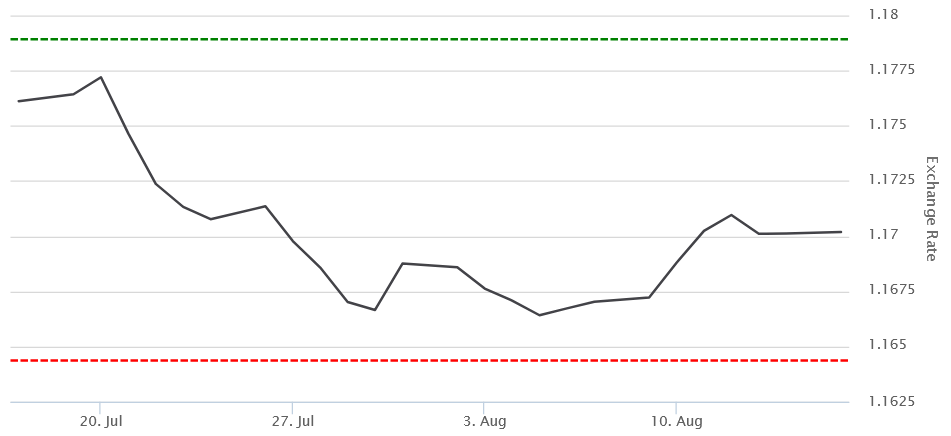
Sterling has recovered some of its mid-July energy against the euro, ending last week up a little and still clear (around 1%) of last year. The pound has also moved up to its best on the US dollar since early May. Indeed, GBP/USD is a good 10% above the average of the past five years.
And it has done all that while negotiating another change of prime minister – and one of a more leftward disposition, which doesn’t always find favour with the currency markets.
So what’s next? This week there’s plenty of potentially impactful domestic data coming down the line. First up will be unemployment and earnings tomorrow. While unemployment will likely grab the headlines, projected to fall slightly from last month’s 4.9%, the Bank of England will also be looking closely at the average earnings figure. This has been running at 3.4% (excluding bonuses), not markedly above inflation, but any signs that workers are demanding higher wages and potentially causing an inflationary spiral will raise worries at the Bank.
Then on Wednesday we get the actual inflation figure for the UK. Last week the USA revealed inflation of 3.4%. However the core inflation rate, without fuel and food, was only 2.5% and falling, not suggesting any immediate need to raise interest rates. If the UK’s also falls it could hit sterling exchange rates, as investors look elsewhere for a better return.
The pound and euro beat the safe-haven currencies (USD, JPY, CHF) last week, as worries over oil supplies receded. But will that positivity have extended to business leaders? We will get that reading this week, with the Purchasing managers Index (PMI), a global poll of business mood, on Friday.
GBP: Growth boosts sterling but new week, new data
Sterling fought off some doubters last week, and though the first bloom may have fallen from the new prime minister, positivity remains following the good news on GDP last week. Up this week there is plenty more data for the markets to chew on, with unemployment and earnings tomorrow, inflation on Wednesday, Retail Sales and PMI on Friday.
EUR: Eurozone economic growth despite oil threats
The euro starts Monday almost unchanged against sterling but stronger against the US dollar. Figures released on Friday showed the eurozone economy expanded by 0.4% in the second quarter after stagnating at the start of the year. Employment also edged higher. But despite this more encouraging backdrop Europe remains exposed to energy disruption. Coming up tomorrow, the Centre for European Economic Research (ZEW) gives its Economic Sentiment index for Germany and the wider eurozone.
USD: Inflation puts dollar into the red
The dollar weakened last week almost across the board following inflation being less than expected at 3.4%. Obviously, this is way higher than the target, but with the previous week’s poor jobs data the US Federal Reserve is in something of a bind. We will hear their current thinking with the release of the FOMC’s minutes on Wednesday, but any imminent move on interest rates seems unlikely.
Below you will find the current live exchange rates and movements in the currency markets. Please note that these rates are only accurate at the time of sending and should be used as an indication only.