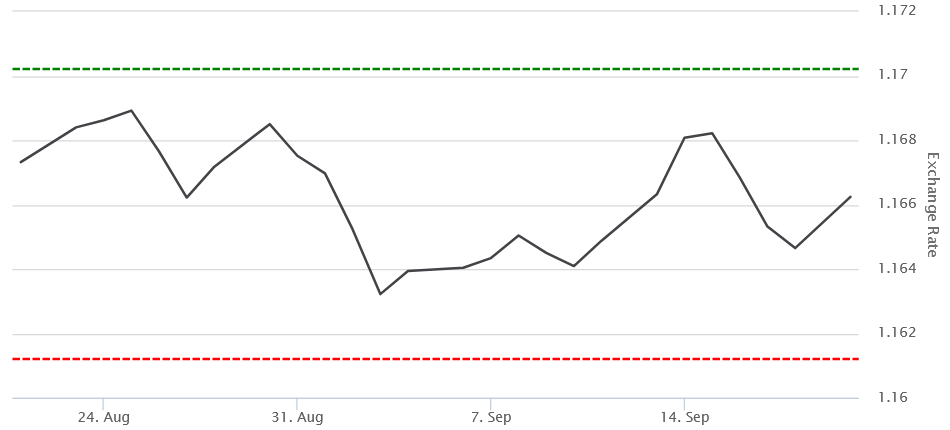
Currency markets begin the week with a fairly clear pecking order. The US dollar has the upper hand, having strengthened by more than 1.5% against both sterling and the euro over the past week. The pound and euro, meanwhile, are almost exactly where they started against one another last week and, indeed, last month.
That follows a crowded few days for central banks. The dollar’s strength is based on the fact that the Federal Reserve raised interest rates for the first time in three years, while the Bank of England held its ground despite three policymakers voting for an increase. Japan also raised rates on Friday. The European Central Bank had already moved earlier in September. For now, those decisions have left the dollar looking the strongest of our three currencies, by some distance.
Attention now turns from what central banks have done to how their economies are coping with it. UK public finances arrive tomorrow in the shape of Net Public Borrowing – of vital interest with the Budget fast approaching. Then Wednesday brings flash Purchasing Managers’ Index (PMI) surveys from the UK, eurozone and United States. With energy prices still high and borrowing costs rising, those numbers should offer an early indication of whether businesses are beginning to feel the squeeze.
With oil still way above $100 (for Brent Crude) the UK and Europe are in equal trouble, which is probably why they have stayed stable against each other. Against commodity-based currencies like the Canadian and Australian dollars, though, the pound has been on the slide.
This week less about another dramatic policy announcement and more about whether the dollar can hold its advantage. Sterling and the euro will be hoping for signs of economic resilience, while the dollar could find its recent strength tested if American activity begins to lose momentum.
Sterling had two very different weeks depending on which currency you were watching. Against the dollar, the pound is well down. Against the euro, it barely moved at all. That puts Tuesday’s public finance figures and Wednesday’s Purchasing Managers’ Index survey in focus. Recent UK growth and retail sales have been reasonably resilient, but markets will now be watching for evidence that higher energy and borrowing costs are beginning to bite.
EUR: Euro steadies after dollar setback
The euro also lost around 1.5% to the dollar last week, yet remained virtually unchanged against sterling. That suggests much of the recent move has been about dollar strength rather than a sudden loss of confidence in Europe. The European Central Bank’s rate increase earlier this month still provides some support, but the same energy shock that encouraged policymakers to act is also a threat to growth. Wednesday’s eurozone Purchasing Managers’ Index figures will therefore be watched closely for signs of how businesses are absorbing those higher costs, while after Germany's political upheaval over the weekend, with extremist parties from left and right winning local elections, we will get a measure of consumer mood with Friday's GfK Consumer Confidence Index.
USD: Dollar starts the week in front
The dollar was the clear winner among the three currencies last week. Higher US interest rates helped, but the more important question now is whether the American economy remains strong enough to justify that advantage. Wednesday’s Purchasing Managers’ Index surveys will be the first major test, followed later in the week by jobless claims, durable goods figures and consumer sentiment. There are also several Federal Reserve speakers due to appear. After last week’s decision, markets will be listening for clues on how much further policymakers believe they need to go.
Below you will find the current live exchange rates and movements in the currency markets. Please note that these rates are only accurate at the time of sending and should be used as an indication only.