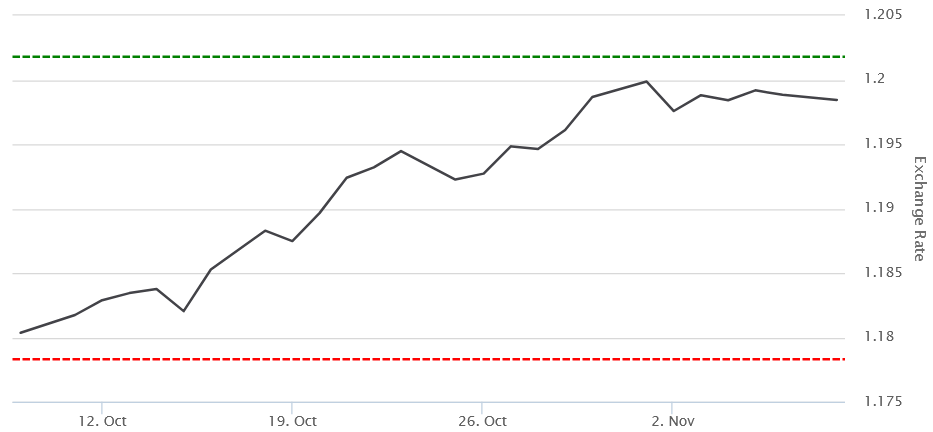
There were some clear losers among leading currencies last week, but only really one winner. The pound, euro and US dollar all strengthened against the Australian, Canadian and New Zealand dollars, and the Norwegian krone, as commodity prices fell.
However, after a week dominated by political upheaval and central bank decisions, the US dollar rallied more than most, and for more traditional reasons on Friday. There were nearly three times as many Non-Farm Payroll jobs added to the US economy in October as had been expected. US unemployment fell to 4.1% – quite the achievement given that Canadian unemployment rose to 6.7%.
That was enough to shift expectations for the US Federal Reserve, with investors increasingly convinced that another interest rate rise is on the cards for December.
It all gave USD its best daily performance in months, taking some of the shine off sterling and the euro after earlier in the week when the dollar had been struggling as markets digested the Democrats’ sweeping victory in the US midterm elections. Wall Street’s enthusiasm for the result soon evaporated as concerns about the technology sector spread across global stock markets. The dollar benefited from that nervousness too, as investors sought somewhere safer to put their money.
The Bank of England’s own interest rate rise continued to divide opinion. Thursday’s increase to 4% was accompanied by a warning that UK inflation could approach 5% next year. Higher borrowing costs may support the pound, but they’re hardly cause for celebration among households and businesses already feeling the pinch.
This morning so far the pound has been looking bullish, gaining a little on the US dollar and close to that 1.20 level against the euro once again.
The focus now shifts to another busy week of economic releases. Tomorrow’s US inflation figures will be the first major test of the dollar’s renewed strength, while Thursday brings fresh UK growth (GDP) numbers. With the Middle East conflict still casting a shadow over energy prices, there’s plenty that could upset the current picture.
GBP: Pound looking uncertain as dollar fights back
The pound remained strong against the euro last week, as a priced-in interest rate rise barely registered and tech stocks reacted badly to the election of data-centre sceptic politicians in the US midterms. Sterling's strong run against the US dollar came unstuck on Friday, slipping by more than half a cent following the American jobs report. However, it has reversed direction again this morning, gaining around 0.25%. Thursday's GDP figures will offer an important clue to further interest rate rises, or not. Bank of England governor Andrew Bailey is also due to speak later today, giving markets another opportunity to judge how much further borrowing costs might rise.
EUR: Euro faces a fresh growth test
The euro also suffered against the resurgent US dollar on Friday, surrendering some of its earlier gains as American employment figures surprised markets. The single currency has had a difficult balancing act of its own, with inflation continuing to rise even as concerns about economic growth linger. This week's economic releases, including German inflation and Friday's eurozone GDP figures, should provide a clearer picture of whether Europe's economy is coping with the squeeze.
USD: Attention turns to inflation
After spending much of last week on the defensive, the dollar finished Friday with a flourish. Stronger employment figures and a wave of nervousness across global stock markets helped it recover against both sterling and the euro. The jobs report also strengthened the case for another Federal Reserve interest rate increase before Christmas, but the next test is tomorrow's US inflation report.
Below you will find the current live exchange rates and movements in the currency markets. Please note that these rates are only accurate at the time of sending and should be used as an indication only.