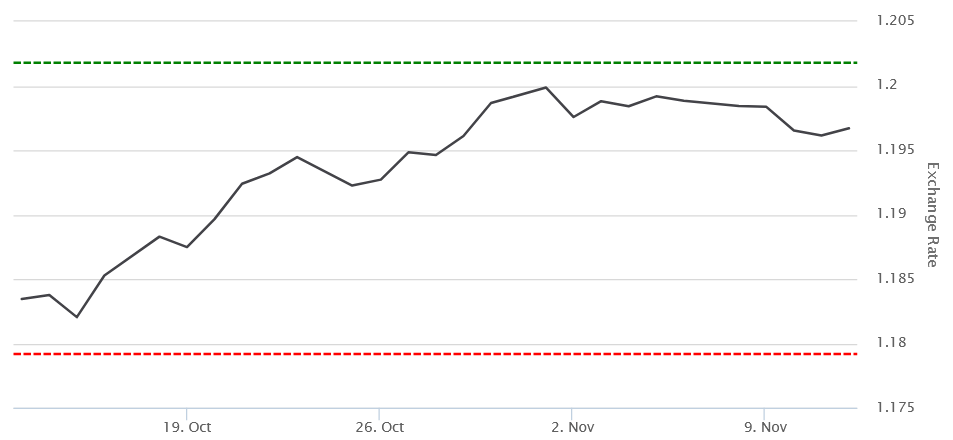
The pound has begun the week at its weakest level against the US dollar since early October, but close to its strongest position against the single currency since May last year. So, is the pound struggling or holding its own?
The answer lies largely in the US dollar’s remarkable run. Sterling lost some 1.5% against the USD last week, its biggest weekly decline since September. But the euro suffered much the same fate. A stronger-than-expected American inflation report, coupled with increasingly firm messages from Federal Reserve interest-rate setters, has convinced the markets that another US interest rate rise is on its way in December.
Back in Britain, things aren’t looking quite so gloomy. Last week’s economic figures showed growth of 0.7% between July and September, the fastest quarterly expansion in more than two years. The Bank of England also raised interest rates earlier this month and has left the door open to another increase before Christmas. That’s helped sterling retain much of its recent strength against the euro, even as the dollar has raced ahead.
The euro has its own problems. While the European Central Bank is also expected to raise borrowing costs next month, economists increasingly believe that could be its final increase for a while. The prospect of the Federal Reserve going further has left the single currency struggling, with the euro falling to its weakest against the dollar in around 19 months.
There’s plenty coming up that could change the picture. British employment figures arrive tomorrow, followed by inflation data on Wednesday. Across the Atlantic, US retail sales and the minutes of the Federal Reserve’s latest meeting will offer further clues about where interest rates are heading. After last week’s sizeable currency movements, the next few days could be just as interesting.
The pound lost ground sharply against the dollar last week but barely moved against the euro, where it remains within touching distance of its best levels in around a year and a half. The next test comes from Britain's jobs and earnings figures tomorrow. The Bank of England has already shown it's prepared to raise borrowing costs to tackle stubborn price pressures. Strong wage growth or another uncomfortable inflation reading on Wednesday could strengthen sterling, but the opposite is also possible.
EUR: Euro struggles to find its footing
The euro lost well over 1% against USD last week, while movements against sterling have been much smaller. The euro is caught between two currencies benefiting from expectations of further interest rate increases, while the markets are less certain that the European Central Bank is prepared to raise rates into 2027. A Reuters survey suggests most economists expect December's anticipated increase to be the last of the current cycle. So the single currency remains sensitive to fresh economic data and any change in the mood among European policymakers. Tomorrow’s ZEW Economic Sentiment Index and Wednesday’s final inflation reading could be influential.
USD: Dollar keeps the upper hand
The US dollar enters the week close to its strongest position against a basket of major currencies in 19 months. The turning point came with last Tuesday's inflation figures, which showed American consumer prices rising by 0.4% in October, more than economists had expected. That added weight to warnings from Federal Reserve officials that inflation remains a problem, encouraging the markets to anticipate further interest rate increases. Attention now turns to Tuesday's retail sales figures and Wednesday's Federal Reserve meeting minutes.
Below you will find the current live exchange rates and movements in the currency markets. Please note that these rates are only accurate at the time of sending and should be used as an indication only.